8,000+

Wisconsin’s Medicaid long-term care system is built around the idea that people should be able to stay at home and in their communities rather than moving into a nursing facility. The state delivers this support through two main program types: self-directed programs, where you control your care and budget, and managed care programs, where a managed care organization coordinates services on your behalf.
The Bottom Line: Wisconsin Medicaid home care usually starts at the ADRC, then moves into either self-directed care through IRIS or managed long-term care through Family Care or Partnership.
Both pathways are funded through Medicaid, known in Wisconsin as Medical Assistance, with BadgerCare Plus covering many eligible adults, and overseen by the Wisconsin Department of Health Services (DHS). While BadgerCare Plus provides general health coverage, long-term care programs like IRIS and Family Care deliver the home-based supports that make family caregiving possible.
To access either one, you’ll start by contacting your local Aging and Disability Resource Center (ADRC), which serves as the front door to Wisconsin’s long-term care system. The ADRC helps you understand your options, complete eligibility screenings, and enroll in the program that’s right for you.
FreedomCare works within this system to help families navigate the process, understand their choices, and make sure the right caregiver gets set up and paid.
Consumer direction means you’re in charge of your care. Instead of an agency sending a stranger to your home, you choose who provides your care, set the schedule, and manage the relationship. In Wisconsin, consumer-directed care is available through the IRIS program and through the self-directed supports (SDS) option within Family Care and Family Care Partnership.
The Bottom Line: Consumer-directed care lets Wisconsin families choose a trusted caregiver, including adult children, siblings, close friends, and in some cases spouses.
This model is especially important for families, because it means a trusted person, your adult child, a sibling, a close friend, or in some cases your spouse, can become your paid caregiver through Medicaid. FreedomCare specializes in helping families take advantage of consumer-directed options so you can receive care from someone who already knows and loves you.

IRIS, which stands for Include, Respect, I Self-Direct, is Wisconsin’s fully self-directed Medicaid long-term care program. It’s a 1915(c) HCBS waiver that gives eligible adults an individualized budget to purchase the services and supports they need to live safely at home. IRIS participants choose their own services, hire and manage their own caregivers, and control how their budget is spent.
The Bottom Line: IRIS gives participants the most control because they manage an individualized budget and choose the caregiver who provides their support.
Under IRIS, you work with two key partners:
One of the biggest advantages of IRIS is the Self-Directed Personal Care (SDPC) option. With SDPC, you can hire, train, and manage your own caregiver, including family members such as adult children, siblings, and in many cases, spouses. No prior caregiving experience is required. The FEA handles the financial and administrative side so you can focus on care.
IRIS is available to eligible Wisconsin residents who need long-term care services and want to self-direct their supports.
The Bottom Line: IRIS eligibility requires Wisconsin residency, Medicaid enrollment, age 18+, and a nursing facility level of care confirmed by the Long-Term Care Functional Screen.
The 2025 income limit for Medicaid eligibility is approximately $2,901 per month for an individual. Your local ADRC can help determine whether you qualify, and FreedomCare can walk you through what to expect.
Family Care is Wisconsin’s Medicaid managed long-term care program. Unlike IRIS, where you manage everything yourself, Family Care assigns you to a managed care organization (MCO) that coordinates your services. Your MCO develops a care plan with you and arranges for providers from its network to deliver the care you need.
The Bottom Line: Family Care is managed by an MCO, but the SDS option can still allow members to hire and manage family caregivers.
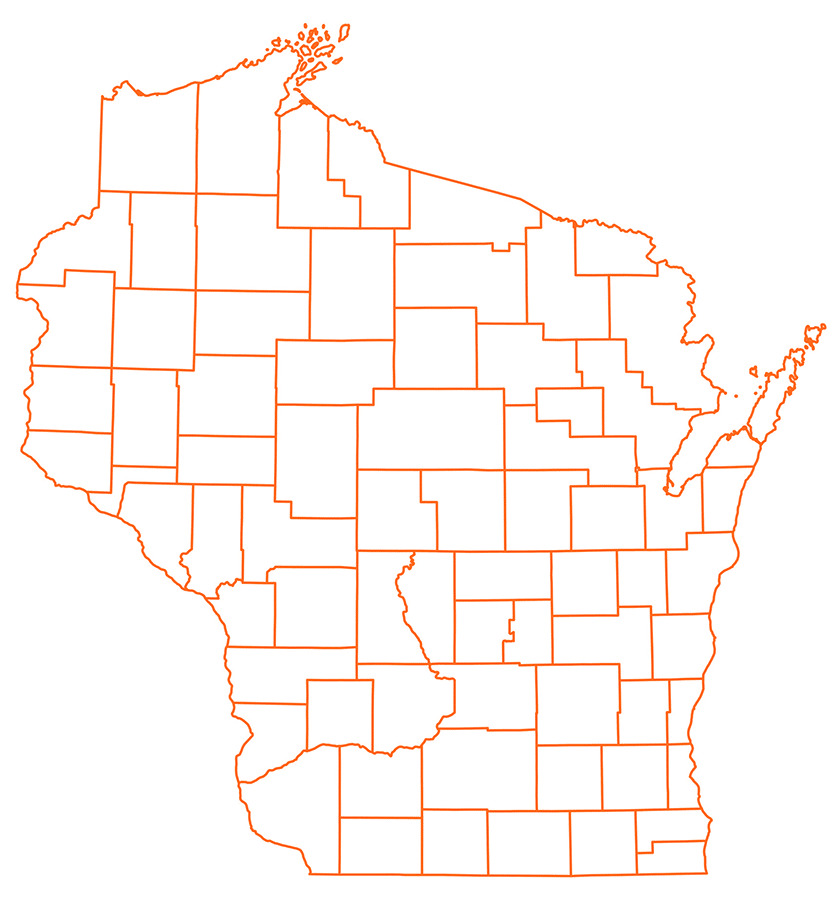
Family Care is available statewide, and members choose from MCOs such as Community Care Inc. (CCI), Inclusa, Lakeland Care Inc. (LCI), My Choice Wisconsin (Molina), and others depending on your region.
What many families don’t realize is that Family Care also offers a self-directed supports (SDS) option. Through SDS, Family Care members can hire and manage their own caregivers, including family members and, in some cases, spouses. This gives you some of the flexibility of IRIS while still having the MCO handle broader care coordination.
FreedomCare can help you understand whether Family Care’s SDS option is available to you and how to get your family caregiver set up within the program.
Family Care Partnership is a specialized version of Family Care for people who are dually eligible for both Medicaid and Medicare. It integrates medical, dental, vision, and long-term care benefits into a single plan managed by an MCO. Partnership also offers self-directed supports, so family caregivers can still be part of the care team.
The Bottom Line: Family Care Partnership combines Medicaid, Medicare, and long-term care benefits for dually eligible members, with SDS options in select counties.
Partnership is not available in every county, but it has been expanding. As of 2025, it’s offered in a growing number of counties across the state. Your ADRC can confirm whether Partnership is an option where you live.
This is one of the most common questions we hear, and the answer depends on the program.
The Bottom Line: Wisconsin may allow spouses to be paid through IRIS SDPC or Family Care SDS, but spouses cannot be paid as live-in caregivers under IRIS SDPC, and legal guardians are generally excluded.
Under IRIS: Yes, in many cases. IRIS’s Self-Directed Personal Care (SDPC) option allows participants to hire family members, including spouses, as paid caregivers. The spouse cannot serve as a live-in caregiver for pay, but SDPC provides a pathway for spousal compensation in most situations.
Under Family Care (SDS): Yes, the self-directed supports option within Family Care also allows family members, including spouses, to be hired as caregivers. However, the MCO has some oversight of the arrangement.
Legal guardians are generally excluded from being paid caregivers across Wisconsin’s Medicaid programs. If you’re unsure how these rules apply to your family, FreedomCare can review your specific situation and help you find the right path forward.
Here’s a clear breakdown of how Wisconsin’s major long-term care programs compare:
The Bottom Line: IRIS offers the most control, Family Care offers more care-team coordination, and Partnership integrates Medicare and Medicaid for eligible members.
| Feature | IRIS | Family Care | Family Care Partnership |
|---|---|---|---|
| Program Type | Self-directed (1915(c) waiver) | Managed care (MCO) | Managed care (MCO) – integrated Medicare + Medicaid |
| Who Controls Care? | You (the participant) | MCO coordinates; SDS option available | MCO coordinates; SDS option available |
| Can Family Be Paid? | Yes (including spouses via SDPC) | Yes (via SDS option, including spouses) | Yes (via SDS option) |
| Budget Control? | Yes – individualized budget | MCO manages budget; limited SDS budget | MCO manages budget; limited SDS budget |
| Age Requirement | 18+ | 18+ | 18+ |
| Medicaid Required? | Yes | Yes | Yes (+ Medicare for full benefits) |
| Availability | Statewide | Statewide | Select counties (expanding) |
| Key Partners | ICA + FEA | MCO + care team | MCO + care team |
| FreedomCare Can Help? | Yes | Yes | Yes |
Choosing between IRIS, Family Care, and Partnership can feel overwhelming. Here’s a simple way to think about it:
The Bottom Line: Choose IRIS for maximum self-direction, Family Care for more coordination, and Partnership if the person has both Medicaid and Medicare and wants integrated benefits.
Choose IRIS if you want full control over your care and budget. IRIS is ideal for families who want to hire a specific person as their caregiver, set their own schedule, and manage their supports independently. If autonomy and flexibility matter most, IRIS is likely your best fit.
Choose Family Care if you prefer having a care team handle coordination. Family Care works well for people who want professional support managing their services without taking on the administrative responsibilities that come with IRIS. The SDS option still lets you hire family caregivers if you want.
Choose Partnership if you have both Medicaid and Medicare and want all your medical and long-term care benefits managed together under one plan. Partnership simplifies things for dually eligible individuals by combining everything into a single program.
Not sure which direction to go? Navigating Wisconsin Medicaid home care programs and HCBS waivers doesn’t have to be confusing. FreedomCare can help you weigh your options based on your family’s needs, your comfort level with self-direction, and what’s available in your county.

The enrollment process follows a similar path regardless of which program you choose:
The Bottom Line: Applying in Wisconsin starts with your local ADRC, then the Long-Term Care Functional Screen, Medicaid financial eligibility, program selection, and caregiver setup.
Here’s the general path families usually follow when applying for IRIS, Family Care, or Family Care Partnership.
Your Aging and Disability Resource Center is your starting point. They provide information, screen for eligibility, and help you understand your options.
This assessment determines your functional eligibility, whether you need the level of care that qualifies you for IRIS, Family Care, or Partnership.
Your income and assets must fall within Wisconsin Medicaid limits. The 2025 individual income limit is approximately $2,901 per month.
Decide between IRIS (self-directed) or Family Care/Partnership (managed care). Your ADRC will walk you through the differences.
Once enrolled, you’ll work with your ICA (for IRIS) or MCO (for Family Care) to develop your care plan, choose your caregiver, and begin receiving services.
If you’re caring for a loved one in Wisconsin and have questions about Wisconsin Medicaid family caregiver pay, FreedomCare is here to help.
The Bottom Line: These FAQs answer the main Wisconsin Medicaid caregiver questions about family pay, IRIS, Family Care, caregiver rates, care hours, and ADRCs.
Yes. Through programs like IRIS and the self-directed supports option in Family Care, eligible family members can be hired and paid as caregivers through Wisconsin Medicaid. FreedomCare can help you determine which program works for your family.
IRIS is fully self-directed, and you control your budget and hire your own caregivers. Family Care is managed by an MCO that coordinates services for you. Both allow family caregivers to be paid, but IRIS gives you more autonomy while Family Care provides more hands-on coordination.
Caregiver pay rates in Wisconsin vary by program, region, and the level of care provided. Wisconsin IRIS program caregiver pay, for example, is set within your individualized budget, while Family Care rates are negotiated through your MCO. Contact FreedomCare for current rates in your area.
Hours depend on your individual assessment and care plan. The Long-Term Care Functional Screen determines your level of need, and your IRIS consultant or Family Care team will work with you to set appropriate hours.
An Aging and Disability Resource Center (ADRC) is your local entry point for Wisconsin’s long-term care system. ADRCs provide free information, screen for eligibility, and connect you with programs. Visit the Wisconsin ADRC locator at dhs.wisconsin.gov/adrc or call your county’s ADRC directly.
The Bottom Line: These resources help Wisconsin families understand Medicaid, IRIS, Family Care, HCBS waivers, ADRCs, self-directed care, and BadgerCare Plus.
Wisconsin Medicaid provides healthcare coverage and long term care services for eligible residents, including programs that support in-home care for seniors and individuals with disabilities.
dhs.wisconsin.gov/medicaid/index.htmThe Wisconsin IRIS (Include, Respect, I Self-Direct) program allows eligible Medicaid participants to manage their own long term care services and hire caregivers of their choosing.
dhs.wisconsin.gov/iris/index.htmThe 1915(c) Home and Community Based Services waiver allows states to provide Medicaid funded long term care services in home and community settings instead of institutional facilities.
medicaid.gov/medicaid/home-community-based-services/home-community-based-services-authorities/home-community-based-services-1915cWisconsin Aging and Disability Resource Centers (ADRCs) help residents learn about long term care options, apply for benefits, and access local support services.
dhs.wisconsin.gov/adrc/index.htmThis FreedomCare resource explains how Medicaid self directed care programs allow individuals to choose their caregivers and receive care at home.
freedomcare.com/what-is-the-medicaid-self-directed-care-programWisconsin Family Care is a Medicaid managed care program that provides long term care services and supports for seniors and adults with disabilities.
dhs.wisconsin.gov/familycare/fcp-index.htmBadgerCare Plus is Wisconsin’s Medicaid health coverage program that provides medical services for eligible low income children, adults, and families.
dhs.wisconsin.gov/badgercareplus/index.htmThe Bottom Line: Wisconsin Medicaid rules, income limits, caregiver eligibility, county availability, and managed care options can change.
Program rules, eligibility requirements, income limits, caregiver rules, and available services may change. This content is for informational purposes only and does not constitute legal, financial, medical, or professional advice. FreedomCare does not determine Medicaid eligibility or guarantee program approval. Contact FreedomCare, your local ADRC, the Wisconsin Department of Health Services, or the appropriate Medicaid agency for the most current program information.




Get clear answers about IRIS, Family Care, Family Care Partnership, spouse caregiver rules, ADRC steps, and how to get a trusted caregiver set up.